
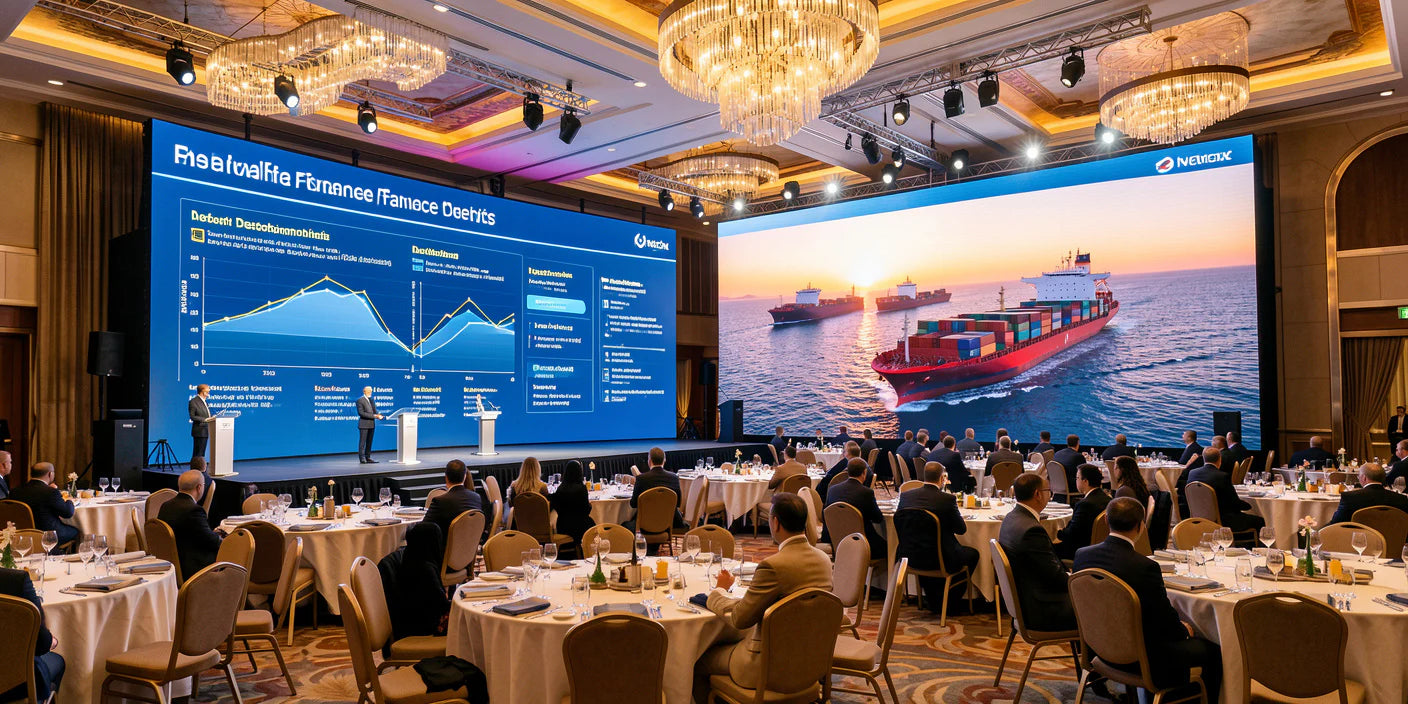
Dubai hosted the TMS Ship Finance and Trade Conference 2026 (SFTC 2026) at Grosvenor House under the theme:
“Ship Finance – helping the industry navigate through increasingly uncertain waters.”
The event drew strong global participation from shipowners, financiers, regulators, registries, and maritime technology providers - reflecting mounting pressure from:
• Geopolitical volatility
• Rising compliance costs
• ESG mandates
• Credit tightening
• Fleet decarbonisation targets
Industry Backdrop: Why It Matters
Global shipping carries ~80–90% of world trade by volume, yet faces structural transformation.
Key pressures include:
• IMO decarbonisation targets aiming for net-zero by 2050
• Rising interest rates across 2025–2026
• Volatile freight markets
• Increased regulatory scrutiny
Compliance costs for greener vessels can raise capital expenditure by 15–30% compared to conventional builds.
Session 1: Financial Strategies in a Volatile World
Panelists examined how owners and investors are adapting to:
• Asset value swings
• Geopolitical realignments
• Credit tightening
• Market cycles
Key insights:
• Diversified funding models are becoming essential
• Alternative capital (private equity, leasing structures) gaining relevance
• Balance sheet resilience critical amid earnings volatility
• Newbuilding strategies increasingly shaped by regulatory uncertainty
Speakers emphasized disciplined capital deployment and risk management as core survival tools in today’s environment.
Session 2: Financing the Green Transition
The second session focused on building financial tools to sustain maritime decarbonisation.
Emerging instruments include:
• Sustainability-linked loans
• Green bonds
• ESG-linked leasing models
• Performance-based financing tied to carbon metrics
Asset values are increasingly linked to:
• Residual life under emission standards
• Technology pathways (LNG, methanol, ammonia-ready vessels)
• Compliance with EU ETS & IMO frameworks
Registries were highlighted as playing a role in lowering compliance risk and improving bankability.
Decarbonisation: Capital Is the Bottleneck
Shipping’s energy transition requires:
• Trillions in global fleet renewal investment through 2050
• Clear regulatory alignment
• Risk-sharing frameworks
Without innovative financing mechanisms, fleet renewal may slow - delaying global emission targets.
Geopolitics & Trade Realignment
Speakers noted:
• Shifting trade corridors
• New Normal Economy patterns
• Regionalisation of supply chains
• Increased energy trade volatility
These macro shifts directly influence:
• Freight demand cycles
• Vessel deployment strategies
• Financing appetite
Why This Matters Beyond Shipping
Shipping finance directly impacts:
• Global commodity flows
• Energy security
• Industrial supply chains
• Trade inflation
For markets like the UAE - a global logistics hub - maritime financing strength reinforces regional economic positioning.
For companies expanding in global trade corridors or considering business setup in dubai, maritime ecosystem resilience becomes a strategic advantage.
Structural Takeaways
• Capital allocation discipline is now mandatory
• ESG risk influences vessel valuations
• Financing innovation will define competitive advantage
• Collaboration across stakeholders is essential
The industry consensus:
Decarbonisation is not just a technical challenge - it is fundamentally a financial architecture challenge.
📰 News Summary
Dubai hosted the TMS Ship Finance and Trade Conference 2026 (SFTC 2026) at Grosvenor House under the theme:“Ship Finance – helping the industry navigate through increasingly uncertain waters.”The event drew strong global participation from shipowners, financiers, regulators, registries,...

Share:
US–Taiwan Trade Deal Lowers Tariffs, Reshapes Tech Supply Chains
What Are Service Charges in Dubai? A Complete Guide for New Property Buyers