
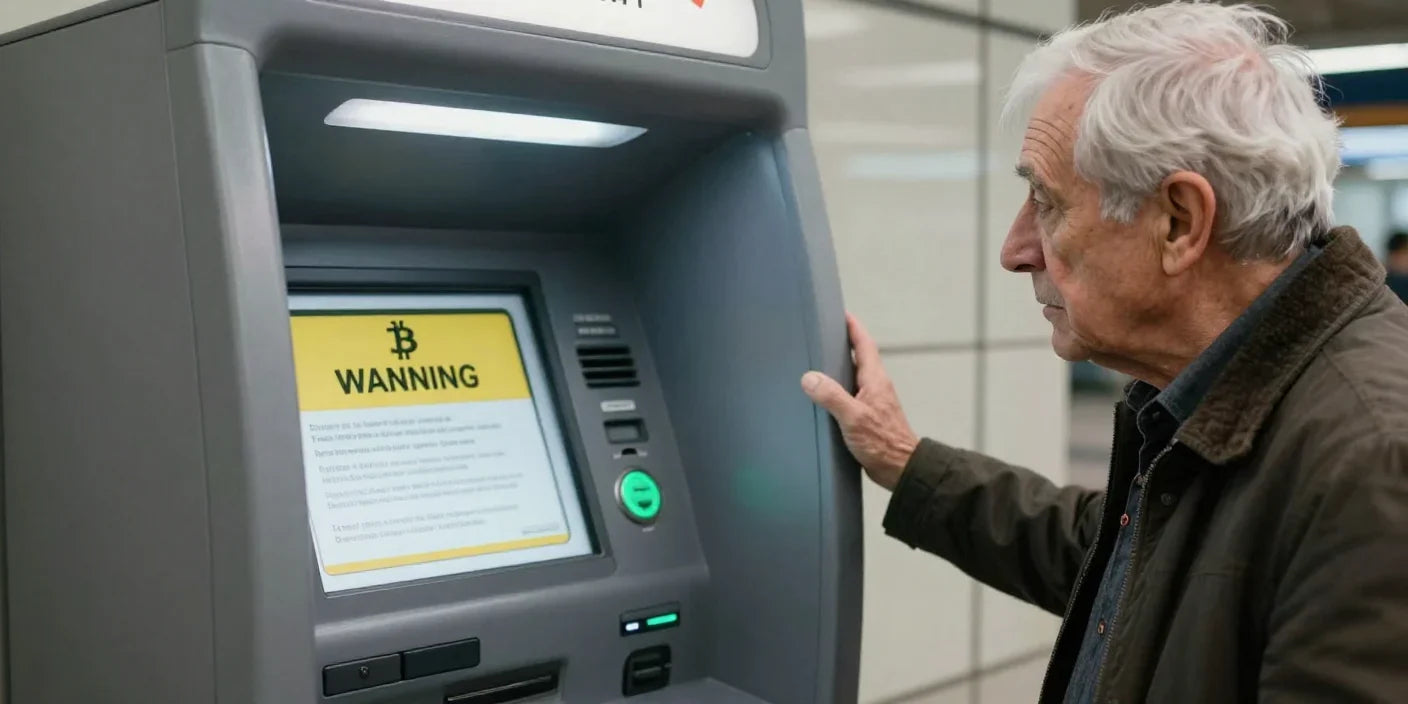
Bitcoin ATM fraud reached unprecedented levels in 2025, with U.S. authorities warning that cryptocurrency-related scams are becoming more organised, aggressive, and financially devastating. According to the Federal Bureau of Investigation, fraudsters siphoned off nearly ₹2,824 crore ($333 million) from victims last year alone - the highest figure ever recorded for this category of crime.
Data released by the FBI’s Internet Crime Complaint Center (IC3) shows that more than 10,000 individuals reported losses linked specifically to bitcoin ATMs in 2025. In most cases, scammers impersonated banks, tech companies, or government agencies, claiming there was suspicious activity on the victim’s account. Victims were then instructed to urgently deposit money into a bitcoin ATM to “secure” their funds - money that was instantly transferred into wallets controlled by criminals.
Record-breaking losses mirror ATM expansion
The surge in fraud has closely followed the rapid spread of bitcoin ATMs across the United States. By 2024, the country hosted over 30,000 machines - more than 80 per cent of the global total. While these kiosks were designed to make cryptocurrency more accessible, law enforcement agencies say they have also become an easy tool for scammers targeting people unfamiliar with how digital assets work.
Federal Trade Commission data shows how quickly the problem has escalated. Losses tied to bitcoin ATM scams stood at roughly ₹627 crore ($78 million) in 2022, rose to ₹916 crore ($114 million) in 2023, and then more than tripled by 2025. The FTC has noted that crypto-related fraud typically results in far higher losses than traditional scams, with median losses running into lakhs rather than thousands.
Older adults face the greatest risk
Authorities say older adults remain the most vulnerable group. FTC figures indicate that people aged 60 and above accounted for over 70 per cent of bitcoin ATM-related losses in early 2024. Experts attribute this to a combination of trust in institutional-sounding callers and limited familiarity with cryptocurrency systems.
Once funds are deposited into a bitcoin ATM, recovery is extremely difficult. Transactions are fast, irreversible, and often routed through multiple wallets across jurisdictions, making enforcement and tracing a challenge.
Warnings grow as oversight gaps emerge
Both the FBI and FTC have reiterated a clear message: no legitimate company or government agency will ever demand payment via cryptocurrency or direct someone to use a bitcoin ATM to resolve an issue. High-pressure tactics, urgency, and secrecy are consistent red flags.
Financial crime analysts say the scale of losses highlights a broader issue - gaps in consumer awareness and transaction oversight. Similar patterns are often uncovered during forensic reviews and auditing services in india, where unexplained fund movements, weak controls, and misuse of emerging payment channels are identified after the damage is already done.
Authorities are urging victims to report incidents immediately, as early reporting improves the chances of tracing wallets, identifying mule networks, and preventing further losses.
As cryptocurrencies become more mainstream, experts warn that fraud will continue to evolve alongside adoption. Education, verification, and skepticism - especially around unsolicited calls involving money - remain the strongest defenses in an increasingly digital financial ecosystem.
📰 News Summary
Bitcoin ATM fraud reached unprecedented levels in 2025, with U.S. authorities warning that cryptocurrency-related scams are becoming more organised, aggressive, and financially devastating. According to the Federal Bureau of Investigation, fraudsters siphoned off nearly ₹2,824 crore ($333 million)...

Share:
Inside the IAS Officer’s Fixed-Rate Bribe System for Land Clearances
Indian Techie in UAE Wins Dh100,000 Big Ticket During Career Uncertainty