
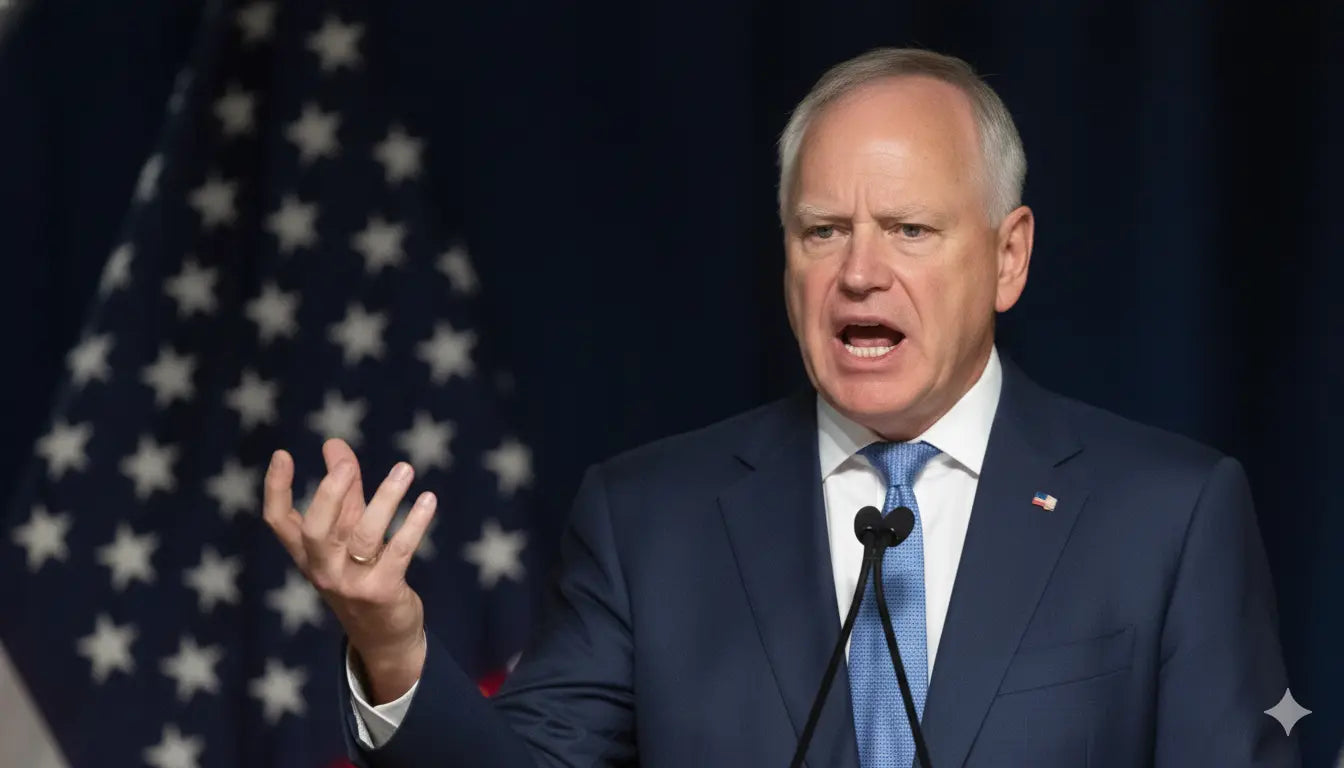
A powerful US House committee, working in coordination with the Treasury Department, has opened investigations into allegations that more than $1 billion was siphoned from Minnesota’s pandemic-era food-aid and other social assistance programmes — with some funds allegedly ending up with Somali militant group Al-Shabaab.
The probe puts Minnesota Governor Tim Walz under sharp scrutiny in Washington, even as investigators stress that terrorism-related claims are still being examined and remain unproven at this stage.
Background: $1Bn COVID Aid Fraud & ‘Feeding Our Future’
The controversy builds on what US prosecutors have already called one of the largest COVID-era frauds in the country: a scheme involving Minnesota-based nonprofit Feeding Our Future and associated organisations that falsely claimed to provide meals to low-income children during the pandemic.
Key facts so far:
- Federal prosecutors say more than $250 million of funds were stolen in the initial “Feeding Our Future” case; lawmakers now cite a broader ecosystem of fraud across state programmes totalling more than $1 billion.
- At least 59 people have been convicted and 78 charged overall in related fraud cases, with money allegedly spent on luxury homes, cars, and overseas investments.
- Internal whistleblowers in Minnesota’s Department of Human Services (DHS) accuse state leadership of ignoring early warnings and weakening oversight.
New Layer: Alleged Terror-Financing Angle
The latest political flashpoint is the allegation that a portion of the defrauded funds may have been diverted to Al-Shabaab, the Somalia-based terrorist group. Some conservative lawmakers and commentators claim that fraud networks tied to parts of Minnesota’s Somali diaspora may have moved money abroad, potentially intersecting with extremist financing.
US Treasury Secretary Scott Bessent has confirmed that the department is probing tax and fund-flow patterns connected to the Minnesota schemes, but stressed that evidence is still being developed.
Tim Walz’s Role & Political Fallout
Governor Tim Walz — a Democrat under increasing attack from Republicans and conservative media — is accused by critics of presiding over “massive fraud” and failing to act on warnings. Hundreds of Minnesota social-service employees have publicly criticised him as “100% responsible” for systemic oversight failures, alleging that fear of appearing discriminatory slowed action against suspect operators.
Walz, for his part:
- Insists that his administration supported federal prosecutions and attempted to freeze suspect payments.
- Has blamed a state judge for ordering continued payments in one phase of the “Feeding Our Future” saga — a claim the judge has publicly disputed.
- Warns against demonising Minnesota’s Somali community, arguing that the actions of a small number of fraudsters should not be used to stigmatise an entire diaspora.
What the New Probes Are Looking At
The US House Oversight Committee and the Treasury Department are now examining:
- How state oversight and federal controls failed to detect or halt fraud across food-aid and other programmes.
- Whether Minnesota agencies under Walz ignored, downplayed or retaliated against internal whistleblowers.
- Any evidence that stolen funds were routed abroad to support extremist groups — or whether such claims remain speculative and politically driven.
- Whether findings warrant criminal referrals at the federal level for anyone in the chain of responsibility.
National Security, Compliance & Governance Takeaways
For policy and compliance observers, the Minnesota scandal blends three high-risk domains:
- Pandemic-era relief fraud on a massive scale, exploiting emergency funding mechanisms.
- Social-programme vulnerability where large flows to NGOs and service providers were not matched by robust audit trails.
- Potential terror-financing exposure — even if not yet fully established, the mere possibility is driving aggressive federal scrutiny.
The case is now a flashpoint in US debates over immigration, social-welfare oversight and counter-terror finance, and is likely to feature prominently in the political battles ahead of the 2026 cycle.
About Shunyatax Global:
Shunyatax Global provides rigorous, compliance-focused coverage of financial crime, tax governance and regulatory enforcement worldwide. For in-depth analysis and expert briefings, visit Shunyatax Global Services.

Share:
AP Liquor Scam: Middleman Reveals ₹78 Crore Laundering Network
Inside Yermak’s Resignation as Zelensky Faces Corruption Storm and Russian Onslaught