
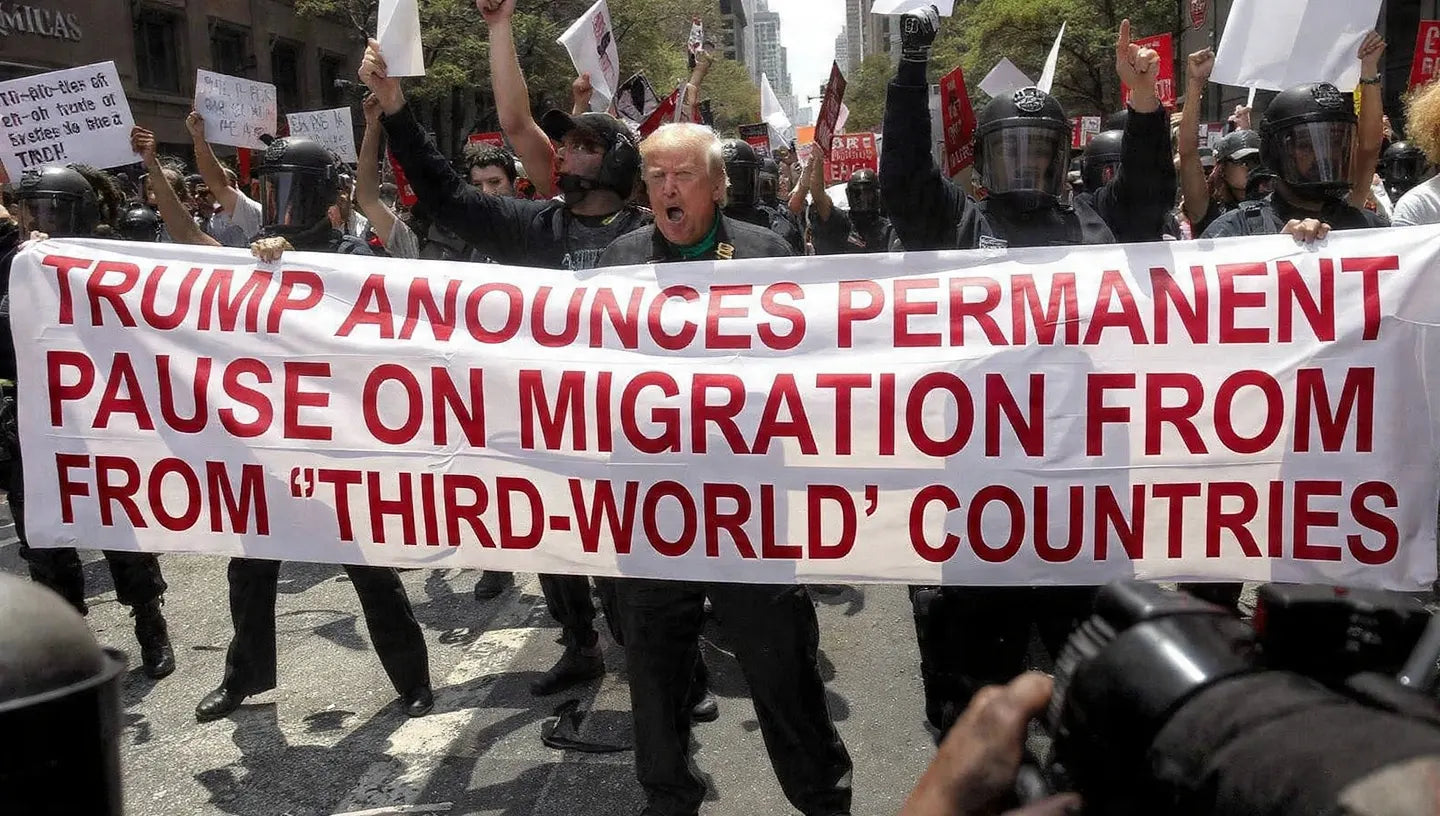
In a sharp turn in U.S. immigration policy on November 28, 2025, President Donald Trump declared a “permanent pause” on migration from all nations he labelled as “Third-World countries”. The announcement, made via his social media platform, comes amid heightened concerns over national security and recent violent incidents involving foreign nationals.
What Trump Announced: Measures and Rationale
Trump said the pause aims to give the U.S. immigration system time to “fully recover” and curb what he described as illegal or disruptive admissions under the previous administration. :contentReference[oaicite:2]{index=2} He also vowed to reverse “millions of illegal admissions” he claims occurred under his predecessor, eliminate federal benefits and subsidies for non-citizens, and deport those deemed a “public charge,” security risk or incompatible with what he calls “Western civilization.”
Further, Trump threatened to revoke citizenship (denaturalize) migrants accused of undermining domestic tranquility, and launched the concept of “reverse migration” — encouraging or forcing return of foreign nationals he deems unfit. :contentReference[oaicite:4]{index=4} His message ended with a forceful warning: “You won’t be here for long.”
Context: Triggering Incident and Policy Shift
The announcement follows a fatal shooting near the White House, where a National Guard member was killed and another wounded — an act attributed to an Afghan national who had reportedly entered the U.S. under a refugee-resettlement program.
In the wake of the attack, the administration halted immigration processing for Afghan nationals and initiated review of previously approved asylum and green-card applications. :contentReference[oaicite:7]{index=7} Trump and his supporters have linked the incident to broader issues of “unchecked” migration and national security — providing the backdrop for the sweeping new decree.
Global Fallout: What It Means for Migrants and International Relations
If implemented fully, the policy would affect millions of migrants worldwide — including those seeking jobs, education, or fleeing persecution. The term “Third-World countries” remains vague, raising fears over arbitrary classification and discrimination.
Immigrant communities, refugee-rights groups, and human-rights organisations have already voiced concerns. Many argue that collective punishment based on nationality could violate international conventions on asylum and non-refoulement. Observers also warn of diplomatic strains with countries whose citizens are suddenly barred without transparent criteria.
The potential economic consequences are significant. The U.S.—long a destination for skilled migrants and refugees — may see a sharp drop in labour-force diversity, international students, and foreign talent. For many developing nations, remittance flows and diasporic ties may suffer.
Legal, Ethical and Practical Challenges Ahead
- Ambiguity of “Third-World Countries”: The term is outdated, lacks precise definition, and its use may invite legal challenges on grounds of discrimination.
- International Law & Asylum Obligations: Blanket bans may clash with international refugee conventions and protection obligations for asylum seekers and persecuted minorities.
- Denaturalisation & Deportation Risks: Revoking citizenship or deporting individuals en masse could face judicial scrutiny and raise human-rights concerns.
- Administrative Overload: The U.S. immigration machinery, already under strain, may struggle with reviewing, reversing admissions and processing deportations at scale — leading to legal backlogs and humanitarian crises.
Why This Matters: Implications for Global Migration & Security Discourse
This policy could mark one of the most sweeping immigration crackdowns in recent U.S. history. Beyond immediate migrant communities, it signals a potent political and ideological stance on national identity, security, and demographic control.
In global context, such moves may reshape migration flows — pushing aspiring migrants to alternate destinations or prompting regional refugee burden sharing. Countries in Asia, Africa and Latin America — often the source of migrants — may face diplomatic pressure, repatriation requests, or asylum-seekers in transit seeking new refugee pathways.
For India and other developing nations with large diaspora populations in the U.S., the announcement adds uncertainty for students, workers, and families currently planning to migrate. It may trigger policy reviews, visa re-evaluations, or heightened scrutiny on travel and migration routes.
For continued coverage — including expert analysis on migrant rights, international law, and geopolitical fallout — keep following Accounting firms in India. We bring clarity to complex global events.

Share:
IIT Kanpur and Indian Army Sign Major MoU to Boost Cyber Defence Capabilities
Delhi Makes 120 Bahadur Tax-Free to Honour Rezang La Heroes