
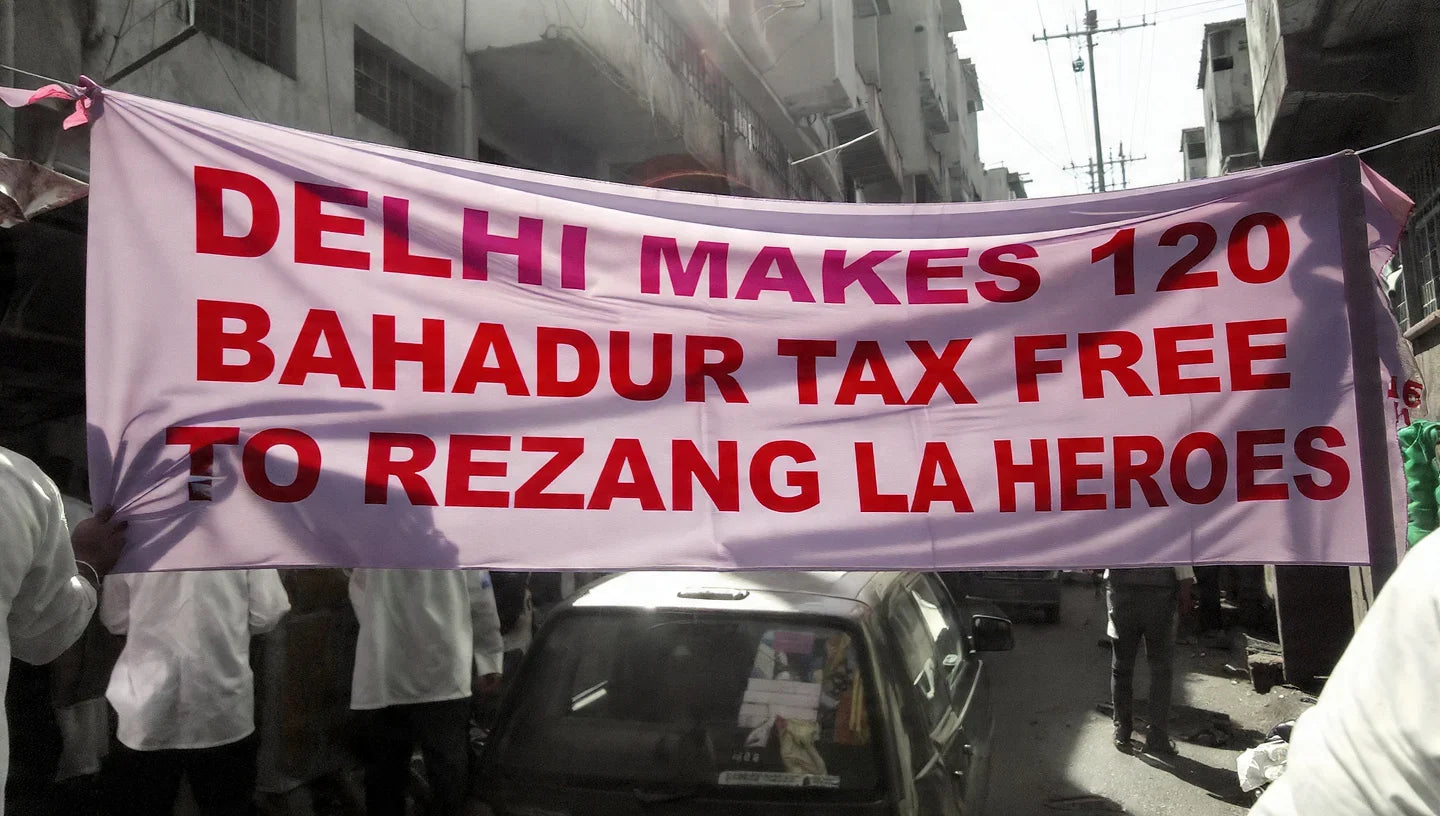
The government of Delhi has officially declared the war-drama 120 Bahadur tax-free across the national capital, beginning 28 November 2025. The announcement by Rekha Gupta — Chief Minister of Delhi — comes as a gesture of respect for the valour and sacrifice of the soldiers of Kumaon Regiment, particularly the Charlie Company, who fought at the legendary Battle of Rezang La during the 1962 Sino-Indian War.
Why the Move? Tribute & Wider Outreach
In a post shared on the social-media platform X, Rekha Gupta described 120 Bahadur as a “historical war film” that honours “extraordinary courage, leadership, and sacrifice” of the 120 soldiers of Charlie Company, 13 Kumaon Regiment — led by Major Shaitan Singh Bhati. The tax exemption is intended to encourage more viewers — especially younger audiences — to watch this cinematic tribute to an iconic chapter of India’s military history.
The film — starring Farhan Akhtar as Major Shaitan Singh Bhati — premiered on 21 November 2025. It dramatizes the heroic last stand of Charlie Company, which fought against overwhelming odds in the freezing heights of Ladakh at Rezang La, sacrificing nearly all its men to defend the nation.
What This Means for Viewers & the Film Industry
- Reduced ticket cost for Delhi viewers: Tax-free status lowers cinema ticket prices, making the film more accessible across socio-economic strata.
- Boost to patriotic films: Government recognition may encourage more filmmakers to explore historical-war stories. 120 Bahadur’s success could signal a renewed audience interest in such narratives.
- Commemoration of national heroes: The exemption serves as official acknowledgment of the sacrifice of the Rezang La defenders, reinforcing collective memory of 1962’s valor and loss.
Background: Rezang La — A Legendary Last Stand
The Battle of Rezang La, fought on 18 November 1962 during the Sino-Indian War, remains one of India’s most revered military episodes. Charlie Company of 13 Kumaon Regiment — predominantly composed of Ahir soldiers — under Major Shaitan Singh Bhati, defended their post at high altitude against a much larger Chinese force. Of the 120 men, 114 were martyred; their sacrifice helped prevent enemy advance toward strategic Chushul-Valley positions.
120 Bahadur attempts to recreate this fierce confrontation — honouring each soldier’s bravery while highlighting the pain, sacrifice, and brotherhood that defined that fateful battle.
Reception So Far: Audience Response & Controversies
The film has drawn praise for its powerful storytelling, vivid war-scene visuals, and emotional weight. Many viewers and critics have lauded its efforts to keep alive the legacy of Rezang La’s martyrs.
However, the movie has not escaped criticism: a Public Interest Litigation was filed before a High Court by some members of the community claiming that 120 Bahadur distorts certain historical facts of the Battle of Rezang La — especially regarding the collective identity and sacrifice of soldiers from specific regiments/community backgrounds.
Why Tax-Free Declaration Matters Now
Granting tax-free status to a film is a symbolic move — a recognition that it carries national significance beyond mere entertainment. It reduces the economic barrier for audiences and underlines the film as a cultural-patriotic project worthy of wider dissemination. In the case of 120 Bahadur, this step by the Delhi government ensures a larger reach and honours the memory of the soldiers who laid down their lives at Rezang La.
As war cinema sees resurgence — blending factual storytelling with dramatic realism — this move may encourage more filmmakers to explore stories of national courage, and prompt governments to use tax incentives to promote films with historical or social importance.
For more such coverage — movies with social, historical or patriotic relevance, and how they shape public memory — stay tuned to Accounting firms in India. We bring clarity to stories that matter.

Share:
Trump Announces Permanent Pause on Migration from “Third-World” Countries
CBI Arrests ITAT Jaipur Judicial Member In Alleged Appeal-Fixing Racket