
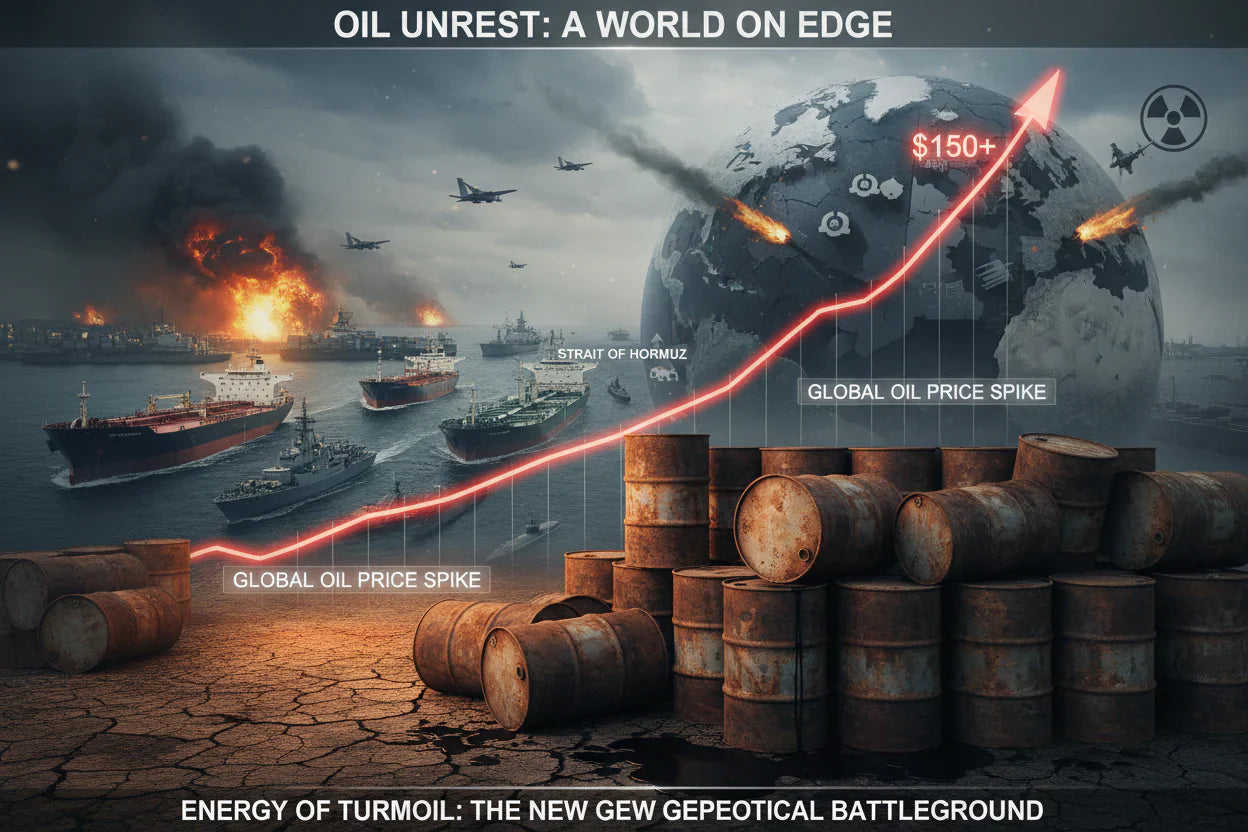
Global oil markets are experiencing sharp volatility as the ongoing conflict involving Iran continues to disrupt energy supply routes across the Middle East.
Oil prices climbed dramatically during the past week after military strikes by the United States and Israel on Iran escalated into a broader regional conflict, raising concerns about prolonged instability in one of the world’s most critical energy-producing regions.
Energy analysts say the disruption could significantly impact fuel prices and global economic stability if the conflict persists.
Oil Prices Jump to Multi-Week Highs
Crude oil prices surged past the $90 per barrel mark, reflecting the growing uncertainty surrounding global energy supply.
-
U.S. crude oil settled at $90.90 per barrel, rising about 36% within a week.
-
Brent crude, the international benchmark, increased 27% during the same period, closing at $92.69 per barrel.
The rapid price increase follows escalating tensions and disruptions to major oil transport routes in the region.
Strait of Hormuz Disruptions Raise Global Concerns
One of the most critical factors driving the surge in oil prices is the disruption of shipping through the Strait of Hormuz, a narrow waterway that connects the Persian Gulf to global markets.
Approximately 20 million barrels of oil per day normally pass through the strait, making it one of the most strategically important energy corridors in the world.
However, the ongoing conflict has left several oil tankers stranded in the Persian Gulf, unable to safely navigate through the region due to missile and drone attacks.
Energy experts warn that prolonged disruption of this route could significantly reduce global oil supply.
Damage to Energy Infrastructure
In addition to shipping disruptions, several major energy facilities in the Middle East have reportedly been damaged during the conflict.
Recent developments include:
-
drone strikes targeting key infrastructure
-
attacks on oil refineries in Saudi Arabia
-
damage to liquefied natural gas (LNG) facilities in Qatar
According to energy analysts, the attack on Qatar’s LNG infrastructure alone has temporarily taken nearly 20% of the global LNG supply offline, intensifying pressure on energy markets.
Fuel Prices Rise for Consumers
The surge in crude oil prices is already affecting fuel costs for consumers and businesses worldwide.
In the United States:
-
Gasoline prices increased to about $3.32 per gallon, rising roughly 11% in a week
-
Diesel prices climbed to $4.33 per gallon, marking an increase of 15%
Energy economists warn that rising fuel costs could increase transportation expenses, airline ticket prices and manufacturing costs in the coming weeks.
Europe and Asia Hit Harder
While fuel prices are rising globally, Europe and Asia are experiencing even stronger price shocks because they rely heavily on energy imports from the Middle East.
According to energy market research:
-
diesel prices have doubled in parts of Europe
-
jet fuel prices have surged nearly 200% in Asia
These increases could affect global supply chains and international travel costs if the situation continues.
Conflict Shows No Immediate Signs of Ending
Political developments suggest that the conflict could continue for an extended period.
U.S. President Donald Trump recently indicated that military operations against Iran could last four to five weeks, though he acknowledged that the United States has the capability to sustain operations for longer if necessary.
Analysts believe that prolonged conflict in the region could keep oil markets volatile and fuel prices elevated.
Economic Ripple Effects Worldwide
Energy markets play a central role in global economic stability, meaning sustained disruptions could impact multiple industries including transportation, manufacturing and aviation.
Higher fuel prices often translate into increased costs for logistics, electricity generation and industrial production, potentially contributing to inflationary pressures worldwide.
For companies operating internationally, financial planning and compliance strategies become increasingly important during periods of market volatility. Many global firms rely on professional auditing services in India to maintain financial transparency and manage economic risks.
Global Markets Closely Monitoring Developments
Energy analysts say global markets will continue to watch developments in the Middle East closely, particularly any escalation affecting energy infrastructure or shipping routes.
If the Strait of Hormuz remains unstable or further infrastructure damage occurs, oil prices could climb even higher in the coming weeks.
For now, governments, businesses and energy traders are preparing for continued uncertainty in global energy markets.
📰 News Summary
Global oil markets are experiencing sharp volatility as the ongoing conflict involving Iran continues to disrupt energy supply routes across the Middle East.Oil prices climbed dramatically during the past week after military strikes by the United States and...

Share:
Bookkeeping Expert Highlights Key Financial Steps Before Starting a Business
Telangana Police Identify 34 Mule Bank Accounts in Cyber Fraud Crackdown