
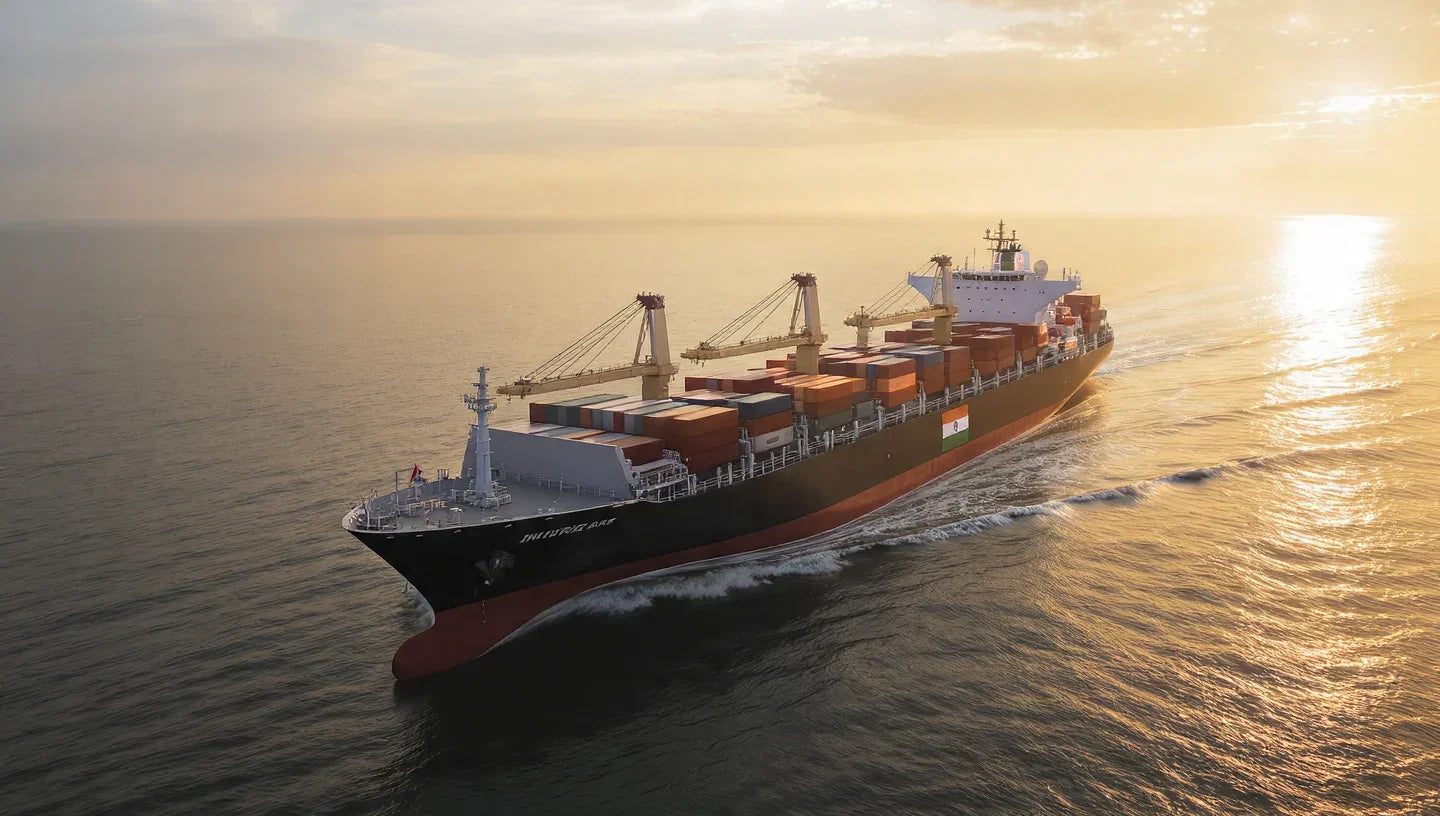
If you’ve ever tried renting a bike in Ladakh or hiring a taxi in Goa, you already know the silent rule: local vehicles only. Outsiders? Not allowed.
This idea isn’t limited to tourism — it exists in global trade too, just on a much bigger scale. The same “local-only” mindset forms the backbone of the cabotage laws that run the world’s shipping industry, from the US to Japan to India.
In India, cabotage rules mean:
-
A ship moving cargo from Mumbai to Chennai must be Indian-flagged, Indian-owned, and often Indian-crewed.
Foreign vessels, even those registered in places like Panama or Cyprus, cannot simply enter and operate freely.
While the intention is good — protecting local shipowners and strengthening domestic logistics — the reality is far more dramatic.
Cabotage laws are now one of the most common tools for profit shifting, transfer pricing manipulation, and freight over-invoicing worldwide.

1. What Exactly Is Cabotage? (With the Ladakh–Goa Analogy You’ll Never Forget)
Cabotage = “Only locals allowed to operate locally.”
Think of it like this:
-
Ladakh → Only local bikes allowed
-
Goa → Only local taxis allowed
-
Shipping Industry → Only local ships allowed
So if a foreign vessel operates globally (say a ship carrying a Panama flag), it cannot move goods between two Indian ports. Only ships bearing the Indian flag can do that route.
Countries claim this protects jobs, boosts national fleets, and improves port infrastructure.
The United States has their own version too — The Jones Act, one of the strictest cabotage laws globally.

2. Why Governments Love Cabotage Laws (On Paper)
Cabotage is promoted as a tool for:
Protecting Domestic Shipping
Local ship owners get guaranteed business. No competition from cheaper foreign ships.
Enhancing National Security
Countries don’t want foreign vessels hopping between their ports freely.
Reducing Dependency on Foreign Fleets
The goal is to build a self-sustaining maritime ecosystem.
Encouraging Local Investments
Shipbuilding, repair, and marine training see more demand.
All of this looks good, but there’s a flip side.
3. The Dark Side: How Cabotage Gets Used for Transfer Pricing Games
Because cabotage rules restrict who can operate locally, companies often manipulate freight prices to shift profits across borders.
This happens in three major ways:
1. Inflated Freight Charges
Foreign parent companies may charge Indian subsidiaries artificially high freight rates for the international leg of transit.
This pushes more profit offshore and reduces taxable income in India.
2. Under-Invoicing of Domestic Freight
If an Indian entity controls both the flag and the freight rate, it can suppress local revenue while inflating costs elsewhere.
3. Using Tax Havens for Vessel Ownership
Ships are often registered in low-tax countries like Panama, Cyprus, Switzerland, and Liberia.
Even though cabotage blocks these flags from domestic routes, companies create layered routing structures to shift income to these low-tax jurisdictions.
This is one of the biggest transfer pricing concerns in the global shipping industry.

4. Cabotage Manipulation Happens Worldwide — Not Just in India
Countries where cabotage is heavily applied or debated:
-
United States (Jones Act)
-
South Korea
-
Japan
-
China
-
India
In the US, the Jones Act is often criticized for raising logistics costs and making goods more expensive for states like Hawaii and Puerto Rico.
Globally, companies restructure ownership and routing to bypass cabotage or exploit it for freight arbitrage and tax positioning.
5. If You Are in the Vessel or Freight Industry — Why This Matters for You
Whether you are a:
-
Ship owner
-
Freight forwarder
-
Logistics provider
-
Maritime CFO
-
Compliance head
You need to understand how cabotage, GST treatment, withholding tax, and transfer pricing rules interact.
Most audits around freight pricing now involve:
-
related-party shipping contracts
-
freight documentation
-
vessel ownership structures
-
beneficial ownership checks
-
comparisons of international vs domestic legs
-
compliance with local shipping incentives
Indian tax authorities increasingly require vessel ownership details when investigating freight and transfer pricing.
If you operate ships, charter vessels, or book freight globally, you may benefit from expert structuring.

Shunyatax Global — Your Trusted Partner in Maritime Tax, Freight Structuring & Compliance
Shunyatax Global believes that financial clarity starts with informed decisions.
We help vessel owners, shipping companies, NVOCCs, freight forwarders, and global logistics players simplify:
If you're in the vessel industry, our expertise in shipping tax, cabotage structures, and transfer pricing can strengthen your compliance and planning.
Start your journey with us today:
📞 Book a Consultation: Shunyatax Global: 1-1 Confidential Advisory
🌐 Visit Our Website: Shunyatax Global Services
📧 Email Us: urgent@shunyatax.in
📰 News Summary
If you’ve ever tried renting a bike in Ladakh or hiring a taxi in Goa, you already know the silent rule: local vehicles only. Outsiders? Not allowed.This idea isn’t limited to tourism — it exists in global trade...

Share:
Mastermind of Varanasi Fake Bank Website Scam Still at Large
Uttarakhand–Dubai Cyber Fraud Racket Busted; Six Held in ₹5.5 Crore Scam