
New Delhi:
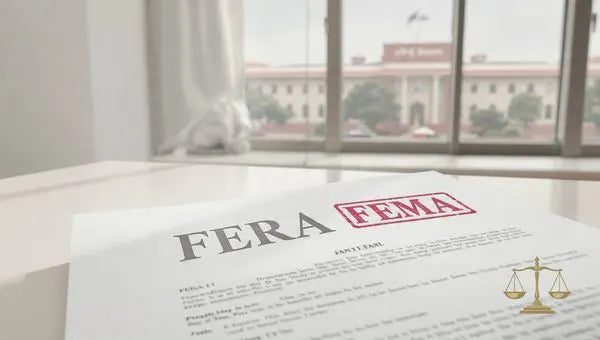
The Enforcement Directorate (ED) is preparing to formally close one of the longest-running chapters in India’s economic enforcement history. The agency has set an internal target of early 2026 to conclude hundreds of cases registered under the now-repealed Foreign Exchange Regulation Act (FERA), some of which have remained unresolved for more than 25 years.
Senior officials say the move is aimed at bringing finality to investigations that have outlived the law itself, while freeing up enforcement and judicial resources currently tied up in outdated proceedings.
FERA, which governed foreign exchange violations for decades, was repealed in 1998 and replaced by the Foreign Exchange Management Act (FEMA) in 2000. Despite this transition, a significant number of legacy cases have continued to move slowly through adjudicatory forums and courts.
400–500 Old Cases Identified for Fast-Tracking
According to officials familiar with the exercise, the ED has identified approximately 400 to 500 FERA cases that are suitable for expedited closure. Many of these matters involve accused persons who are deceased, untraceable, or cases where the disputed assets have already been liquidated or no longer exist.
“These cases no longer serve any meaningful enforcement purpose but continue to occupy court time and departmental manpower,” a senior official said.
The agency plans to prioritise such matters over the coming months, with the first quarter of 2026 set as the internal deadline for completing the process.
ED Director’s Push to ‘Complete the Lifecycle’ of Cases
The renewed focus follows directions issued by ED Director Rahul Navin during a recent conference of senior officers in Gujarat. He instructed officials to ensure the “completion of the lifecycle” of long-pending FERA adjudication cases, signalling a shift away from legacy litigation.
Officials said the directive reflects a broader institutional realignment, allowing the agency to concentrate on current enforcement priorities such as FEMA violations, money laundering probes, and cross-border financial crimes.
The move is also expected to provide relief to courts that continue to hear decades-old cases with limited scope for effective resolution.
From FERA to FEMA: A Fundamental Legal Shift
FERA was widely regarded as a strict, control-oriented law, criminalising most foreign exchange violations and granting authorities extensive powers of arrest and prosecution. It reflected India’s pre-liberalisation economic philosophy.
FEMA, introduced as part of economic reforms, adopted a compliance-based approach focused on managing foreign exchange rather than criminalising it. Under FEMA, most violations attract monetary penalties instead of imprisonment.
Legal analysts point out that keeping FERA-era cases alive runs counter to the spirit of India’s modern economic framework - particularly at a time when structured compliance, transparent accounting, and disciplined bookkeeping services in India form the backbone of regulatory governance.
A Legacy Dating Back to 1947 Nears Its End
India’s foreign exchange enforcement regime dates back to 1947, when the first FERA legislation was enacted soon after Independence. The Enforcement Directorate itself was established in 1956 to investigate violations under the law.
FERA 1973 replaced the earlier version, and FEMA eventually replaced FERA in 1999. With the proposed closure of long-pending cases, the ED believes it is finally drawing a line under a regulatory legacy that spans nearly eight decades.
Relief for Courts and Enforcement Machinery
Officials said the closure drive will significantly reduce legacy litigation, release manpower, and improve case management efficiency. It will also allow enforcement agencies and courts to focus on contemporary economic offences that pose real-time risks to India’s financial system.
Experts view the move as both symbolic and practical — marking the end of India’s transition from a restrictive, control-driven foreign exchange regime to a modern, compliance-led framework aligned with global business practices.

Share:
Fake QR Codes Pose New Threat to UPI Users in India
CBI Charges 17 Accused in ₹1,000-Crore Transnational Cyber Fraud Case