
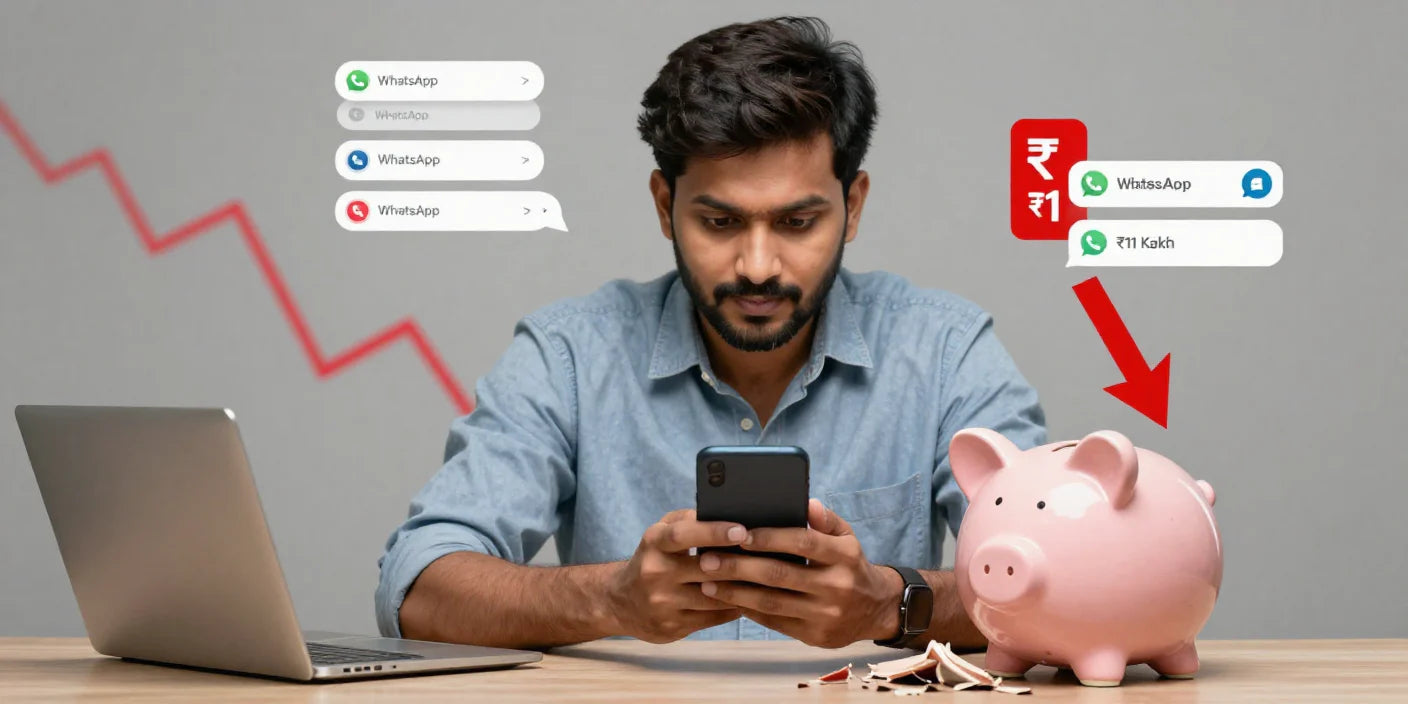
The ₹200 Task That Cost ₹11.31 Lakh
A private company employee was defrauded of ₹11,31,400 after being lured into a so-called “work-from-home” opportunity offering ₹200 per task for sharing YouTube channel links.
The fraud followed a now-familiar pattern:
small payouts → trust building → “premium task” upgrades → large deposits → complete disappearance.
The case has been registered at a cyber crime police station, and investigations are ongoing.
Trust Built Through Small Payments
The victim, Shailendra Kumar Yadav, was first added to a WhatsApp group on January 4 offering online income opportunities. He was then shifted to Telegram, where he was instructed to:
-
Subscribe to YouTube channels
-
Share screenshots
-
Earn ₹200 per completed task
Initial payments reinforced credibility:
-
₹600 credited for 3 tasks
-
₹2,000 deposit → ₹2,800 return
-
₹5,000 deposit → ₹8,060 return
These early profits created psychological comfort.
Encouraged, he began transferring larger amounts. Over time, total transfers reached ₹11.31 lakh, after which he was pressured to deposit an additional ₹8,33,361. Communication abruptly stopped.
Organised Multi-Layer Fraud Module Suspected
Investigators suspect:
-
Multiple bank accounts used as money-mule networks
-
Telegram-controlled task funnels
-
Fake payment dashboards
-
Inter-state SIM card chains
-
Layered digital wallets
Digital evidence under analysis includes:
-
KYC records of beneficiary accounts
-
IP logs
-
Transaction trails
-
Chat archives
Such fraud modules are increasingly decentralised and transnational, making recovery complex.
Future Crime Research Foundation Warning
The Future Crime Research Foundation classifies task-based scams as a “low-entry, high-scale” model.
Common variations include:
-
YouTube subscription tasks
-
App reviews
-
Hotel ratings
-
Link sharing
-
Fake crypto signals
Fraud networks scale operations rapidly using automated Telegram bots and rotating bank accounts.
India faces thousands of cyber fraud complaints weekly, and task-based scams are among the fastest-growing categories.
Psychological Manipulation: The “Reward Loop” Strategy
Experts describe the fraud pattern as a behavioural trap:
-
Small guaranteed reward
-
Controlled profit illusion
-
Limited-time “VIP” tasks
-
Urgency-driven deposits
-
Isolation from external advice
The victim experiences a false sense of success before large capital exposure.
Preventive Advisory for Citizens
Authorities recommend:
-
Never deposit money for online “tasks”
-
Avoid unknown WhatsApp/Telegram job offers
-
Use only verified employment portals
-
Report suspicious activity immediately
If fraud occurs:
-
Call Cyber Helpline 1930
-
File complaint at National Cyber Crime Portal
-
Report within the “golden hours” to improve fund freeze probability
Why Cyber Hygiene Matters More Than Ever
With India’s digital ecosystem expanding rapidly, fraud prevention is no longer optional. Whether individuals engaging in freelance work or entrepreneurs exploring bookkeeping services in India for financial compliance, robust digital verification and transaction discipline are essential.
Cybersecurity today is directly tied to financial survival.
The Larger Message
Organised cyber fraud is evolving into a structured economy. Early payouts are bait - not proof of legitimacy.
The ₹200 task was not income.
It was the opening move in a calculated extraction strategy.
As investigations continue, the case highlights one critical lesson:
In the digital age, trust must be verified - not assumed.
📰 News Summary
The ₹200 Task That Cost ₹11.31 LakhA private company employee was defrauded of ₹11,31,400 after being lured into a so-called “work-from-home” opportunity offering ₹200 per task for sharing YouTube channel links.The fraud followed a now-familiar pattern:small payouts →...

Share:
From Data to Trust: Cybersecurity Becomes an Existential Imperative for Enterprises
Dollar Gift’ Romance Scam: Man Duped of ₹40.44 Lakh by Fraudster Posing as Indonesian Woman