
Demurrage charges might sound like a boring shipping term—but in the global trade game, it’s one of the smartest loopholes used by international companies to leak profits and save big on taxes. Especially in India, foreign vessel owners and shipping arms have found crafty ways to move money out - all under the garb of “delay fines.”
Let’s break this down in a simple way (no jargon, promise).

What Are Demurrage Charges? Think of It Like a Parcel You Forgot to Pick Up
Let’s say you ordered something big from Amazon. You’re not home, and the delivery person holds it in the warehouse for a few days. They’re using space and time, so naturally, they charge you extra.
That small extra fee? That’s demurrage.
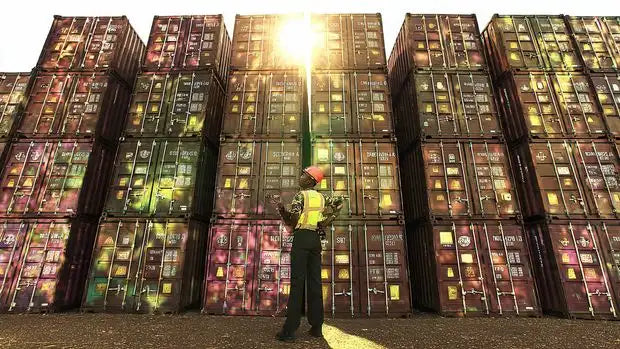
Now scale that up to shipping containers coming into a port. If they aren’t picked up or cleared on time, the port authority charges the company rent for holding them there. These fines can go into crores depending on the delay.
So far, fair game. But here’s where it gets shady.

How Demurrage Becomes a Tool for Profit Leaking
Let’s take a real-world-style example
A Swiss company — let’s call it Sunutex Global SA — ships copper scrap to India. Its Indian arm, Sunutex Global Copper India, is supposed to receive it and do the paperwork. But Sunutex SA “deliberately” delays the shipping paperwork by 5 days.
As a result, the Indian arm has to pay ₹3.5 crore as demurrage charges to hold the containers at port.
Now here’s the twist: Instead of absorbing this penalty as a loss, Sunutex cleverly shows this ₹3.5 crore as an expense on the Indian side.
But only a tiny part of that fine is actually paid locally.
The remaining amount is shown as 'admin fees' and 'documentation charges', and sent to their subsidiaries in Dubai and Marshall Islands — two tax-friendly zones.
Why? So they can reduce taxable profits in India, and shift the money to places with zero or low tax.
Why This Matters to Indian Tax Authorities
This is not illegal by default, but it sits in a grey zone. And for Indian tax officers, this kind of manipulation is becoming a pattern.
It allows:
-
Foreign companies to under-report income in India
-
Repatriate earnings in the name of service fees
-
Exploit high-volume imports to hide profits
And this isn't just about copper or shipping. These tricks are used in pharma, electronics, crude oil, and even digital services.

Is This Tax Evasion or Smart Structuring?
That depends on intent and documentation.
If the delay is genuine and paperwork supports the demurrage, it’s okay.
But if delays are engineered, and expenses are routed to group companies in tax havens, it qualifies as base erosion and profit shifting (BEPS) — something the Indian Income Tax Department watches very closely.
Also, under India's General Anti-Avoidance Rule (GAAR), such transactions can be flagged and re-characterized to impose higher taxes and penalties.
What Can Indian Importers & Businesses Learn from This?
If you're running an Indian business that imports from foreign group companies or vendors:
Stay Alert On:
-
Overstated demurrage and shipping costs
-
Admin/documentation fees going to tax havens
-
Deliberate delays in customs or paperwork
Avoid:
-
Using intercompany service invoices without clear documentation
-
Routing charges through unrelated subsidiaries without contracts
-
Letting overseas parent companies handle port-related compliance loosely
Global Example: How This Plays Out Internationally
Countries like Australia, the US, and the UK have already caught such tactics:
-
In 2020, an international logistics firm was fined in Australia for using fictitious delay charges to siphon profits to Singapore.
-
The US IRS recently increased audits on intercompany shipping charges.
India is catching up, and customs + tax data are now synced digitally, so mismatches in charges stand out quickly.
Final Thought: Demurrage Is Just One of Many Loopholes
Foreign players also use:
-
Technical consulting fees
-
Brand royalties
-
Cloud service subscriptions
-
“Training” expenses
All in the name of “services” to reduce their Indian tax bill.
Demurrage is just the easiest one to hide — because it sounds legit. But the trail it leaves is long and, thankfully, trackable.
Shunyatax Global says that financial clarity starts with informed decisions.
We provide end-to-end tax filing, NRI services, and investment planning for individuals and businesses.
📞 Book a Consultation: Shunyatax Global: 1-1 Confidential Advisory
🌐 Visit Our Website: Shunyatax Global Services
📧 Email Us: urgent@shunyatax.in
Whether you're dealing with foreign imports, need help with bookkeeping services in India, or want to explore Business Setup in Dubai — we’ve got you covered.
✍️ Blog Summary
Demurrage charges might sound like a boring shipping term—but in the global trade game, it’s one of the smartest loopholes used by international companies to leak profits and save big on taxes. Especially in India, foreign vessel owners and shipping arms have found crafty ways...

Share:
India–Vietnam Travel Is Booming Again - And So Are The Business Opportunities
Why Companies Suddenly Turn Profitable Before Listing on the BSE