
Thailand’s military on Monday announced targeted airstrikes against what it described as Cambodian military positions along the disputed border. The action came hours after two Thai soldiers were reportedly killed in Cambodian firing near the contentious frontier zone.
Cambodia immediately rejected the allegation, stating that its forces did not initiate any attack, and accused Thailand of escalating tensions unprovoked. The exchange has revived fears of another deadly phase in a decades-long territorial dispute that has repeatedly displaced civilians on both sides.
Why the Border Is Volatile: The Preah Vihear Temple Dispute
At the centre of the latest flare-up is the Preah Vihear Temple, a centuries-old Hindu sanctuary dramatically situated atop a cliff along the Cambodia–Thailand border. Though the International Court of Justice (ICJ) ruled in 1962 that the temple lies within Cambodia, disagreements over the surrounding 4.6-sq-km area have persisted.
The disputed terrain has been a frequent flashpoint for military confrontations, including the violent clashes in July, which left at least 48 people dead and forced thousands to flee their homes.
For many Cambodians, the temple is a symbol of national heritage and identity. For some in Thailand, particularly nationalist groups, Preah Vihear represents unresolved historical claims. This emotional and political backdrop makes the region especially vulnerable to flare-ups.
Thailand’s Response: Retaliation After Soldiers Killed
According to a statement by the Thai army, the latest airstrikes targeted “military installations responsible for hostile fire.” Thai officials said the strikes were necessary to protect their forces and deter further aggression.
Cambodia, however, has maintained that it did not fire upon Thai troops, calling the Thai action “an unwarranted act of hostility.” The Cambodian government claimed its military exercised maximum restraint to avoid escalation.
Humanitarian Impact: Civilians Flee as Tensions Rise
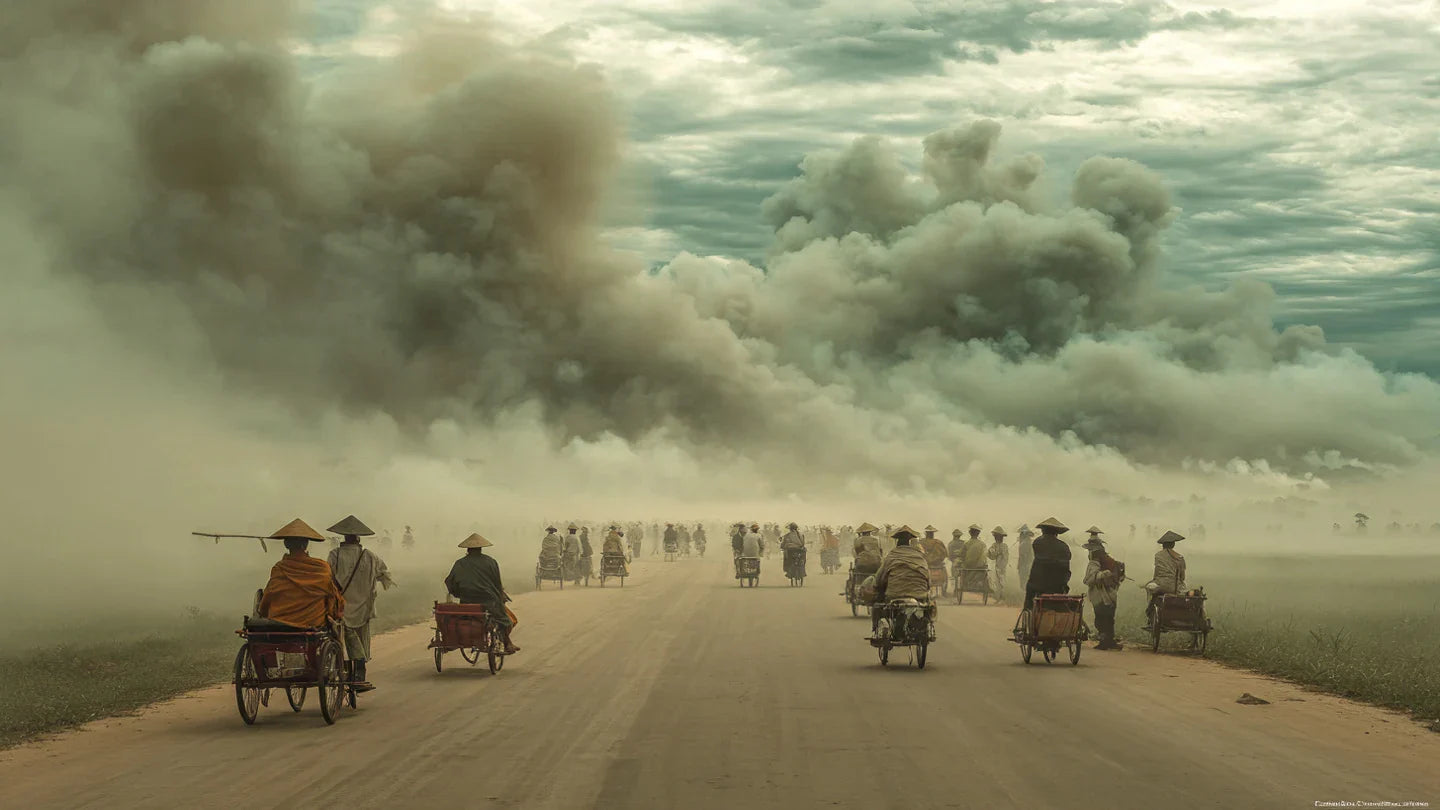
Visuals from the conflict zone showed Cambodian Buddhist monks evacuating from Preah Vihear province as the threat of further military action loomed. Thousands of civilians on both sides have already been displaced this year due to sporadic fighting.
The border’s rugged terrain, combined with limited evacuation routes, has intensified humanitarian challenges, raising concerns among international observers.
Diplomatic Repercussions and Regional Concerns
The renewed clashes come at a sensitive time for Southeast Asia, where territorial disputes remain a source of recurring instability. ASEAN has traditionally struggled to mediate effectively in bilateral conflicts involving member states, and the latest escalation may test the bloc’s regional conflict-resolution capacity yet again.
Both governments are facing pressure—from citizens, neighbouring nations, and global institutions—to return to dialogue before the confrontation spirals.
What Happens Next?
Diplomatic channels remain open, but with mutually contradictory claims and rising casualties, the situation could worsen without immediate intervention. Analysts warn that any miscalculation or localised attack could trigger broader confrontation.
For now, both armies remain on high alert along one of Southeast Asia’s most sensitive borders.
Conflicts and cross-border tensions often highlight the importance of transparency, governance, and risk management within institutions. Businesses too must ensure their financial and operational practices withstand scrutiny.
Explore structured and reliable auditing services in India to strengthen compliance and reduce exposure to regulatory risks.

Share:
Bomb Threat Email Triggers High Alert at Hyderabad Airport
Trump Imposes 5% Tariff on Mexico Over Water Treaty Violations