
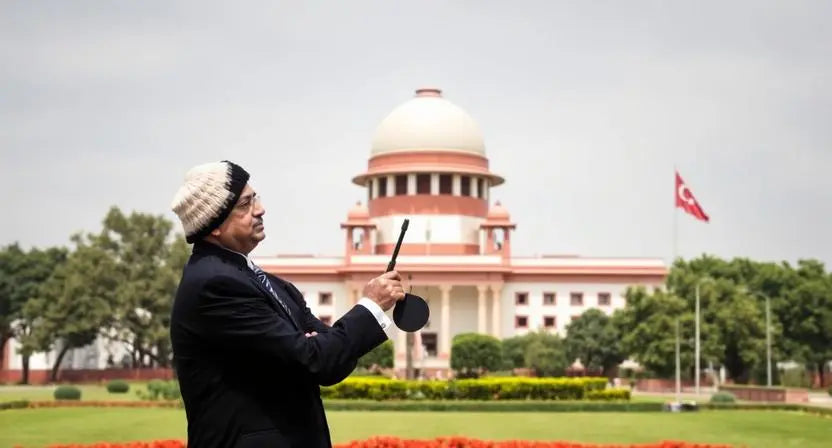
The Supreme Court has granted bail to Mahesh Joshi, former minister and senior political leader from Rajasthan, in a money-laundering case linked to alleged financial irregularities during his tenure.
The order provides temporary relief while investigative and judicial proceedings continue.
Allegations Behind the Case
The Enforcement Directorate (ED) initiated the money-laundering probe based on earlier complaints alleging:
-
Misuse of official position
-
Irregular handling of public funds
-
Favourable decisions benefiting select individuals or contractors
-
Unexplained financial transactions and disproportionate assets
The ED argued that certain monetary flows pointed to concealment of income and potential layering of funds, prompting invocation of the Prevention of Money Laundering Act (PMLA).
Why the Court Granted Bail
The Supreme Court considered multiple factors while granting bail:
-
Joshi’s cooperation during earlier phases of investigation
-
The fact that custodial interrogation was not deemed necessary at this stage
-
Assessment that the allegations, while serious, involve documentary evidence already in ED’s possession
-
Parity with earlier orders where similarly placed accused were granted relief
The Court, however, clarified that bail does not amount to a clean slate and that the investigation may continue unhindered.
Conditions Imposed by the Court
As part of the bail order, the Court directed that:
-
Joshi must not influence witnesses or tamper with evidence
-
He must cooperate with all future summons and inquiries
-
Travel restrictions may apply unless specifically permitted
-
Any breach of conditions will allow the prosecution to seek cancellation of bail
These conditions aim to ensure a fair and uninterrupted investigation.
Political and Legal Significance
The case has drawn attention due to Joshi’s political stature and the broader debate around alleged corruption in public administration.
Key implications include:
-
Increased scrutiny on financial decisions made by previous government officials
-
Potential impact on ongoing political narratives in Rajasthan
-
Reinforcement of judicial oversight in high-profile PMLA matters
The bail order also highlights the judiciary’s cautious approach in balancing personal liberty with the seriousness of financial-crime allegations.
What Happens Next
The ED will continue examining:
-
Bank statements and property records
-
Financial trails involving associates or related entities
-
Whether assets acquired during the period were funded through legitimate sources
If more evidence emerges, supplementary complaints or further charges may follow.
The trial court will proceed with framing of charges once the investigation reaches the required stage.
Shunyatax Global Insight
The Supreme Court’s decision to grant bail to Mahesh Joshi underscores a consistent judicial principle: bail is the rule, jail is the exception, especially when documentary evidence forms the backbone of the case.
For policymakers and public-office holders, the case is a reminder that financial transparency remains critical - and that PMLA scrutiny extends far beyond traditional white-collar environments.
Shunyatax Global Services will continue to track updates in major political and financial-crime cases across India.

Share:
ED Executes First-Ever Money-Laundering Raids in Meghalaya – Shunyatax Global
STF Uncovers ₹100 Crore Fake-KYC Loan Fraud in Noida