
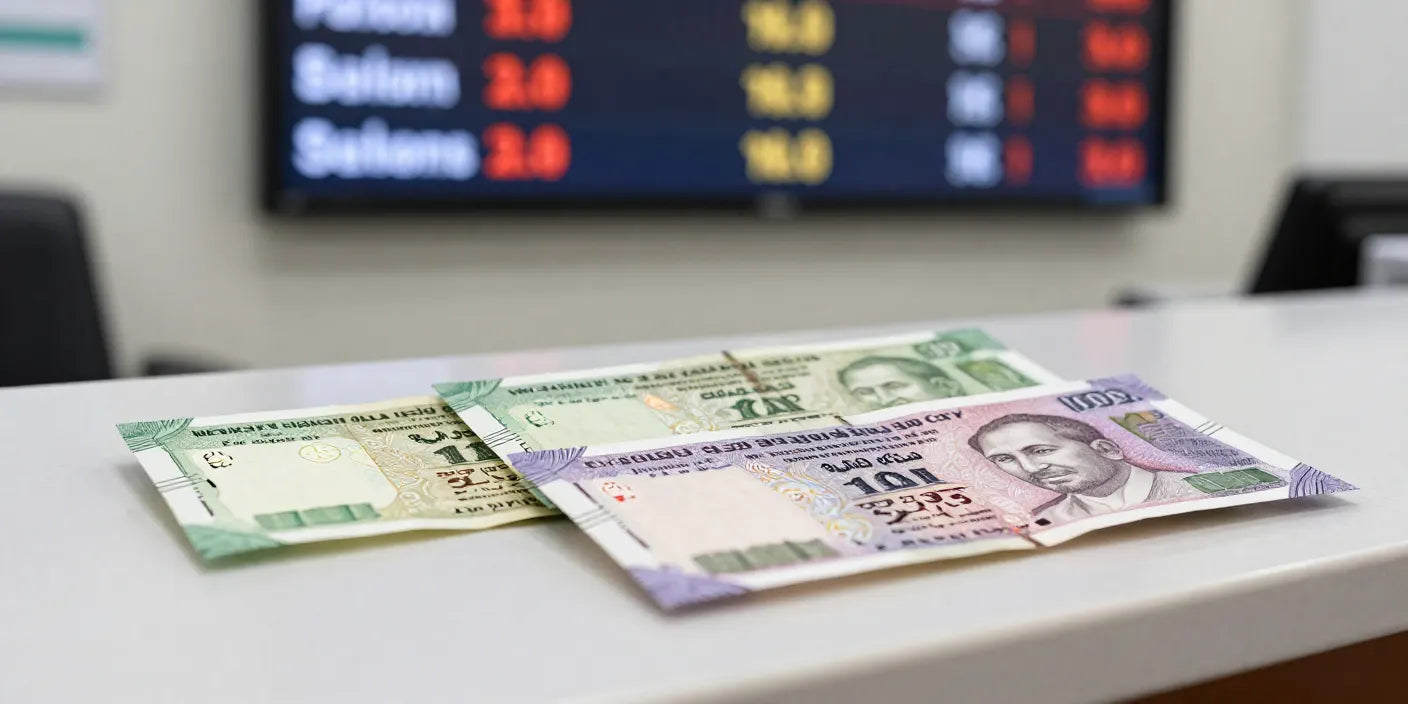
Indian rupee, Pakistani rupee and Philippine peso hover near multi-year lows, giving expats a stronger remittance window
Dubai | January 2, 2026
For thousands of UAE expatriates, the start of 2026 has brought a familiar question back into focus: Should you remit now or wait?
With several Asian currencies trading near their weakest levels in recent years, many expats are finding that every dirham sent home stretches a little further.
The Indian rupee, Pakistani rupee, and Philippine peso have all remained under pressure against the UAE dirham, driven by a mix of global interest-rate expectations, regional political uncertainty, and slowing economic momentum back home.
Indian Rupee: A Strong Window for Transfers
The Indian rupee recently slipped to around ₹24.71 per dirham, marking one of its weakest levels so far. Currency dealers in the UAE say this has prompted a noticeable uptick in remittances, especially among families managing education costs, EMIs, and long-term savings in India.
Many expats are adopting a cautious strategy - sending part of their money now while holding back the rest, just in case the rupee weakens further.
This trend is particularly visible among professionals and entrepreneurs involved in business setup in Dubai, where managing cross-border cash flows efficiently has become a key part of financial planning.
Philippine Peso: Pressure From Political and Economic Headwinds
The Philippine peso has been trading in the 15.87–16.07 range per dirham, reflecting market unease tied to political developments, slower growth, and an expanding corruption probe.
Traders describe the peso’s current phase as one of its most volatile since 2022. While this uncertainty has weighed on confidence, it has also created a short-term advantage for UAE-based Filipinos remitting funds to support families or investments back home.
Pakistani Rupee: Stability at Weak Levels
The Pakistani rupee, meanwhile, continues to hover near historically weak territory, trading close to 76.67 per dirham. Although daily movement has been limited, the broader trend remains soft.
For Pakistani expats, this stability at lower levels has encouraged steady remittance flows, particularly for household expenses and long-term obligations.
What Expats Are Doing Differently
Exchange houses across the UAE say remitters are becoming more strategic. Instead of sending lump sums, many are breaking transfers into smaller tranches - balancing the benefit of current rates with the risk of sudden reversals.
With global markets still digesting expectations around US interest-rate cuts and currency volatility likely to persist, timing remains as important as the rate itself.
Current Exchange Rates (January 2, 2026)
-
Indian rupee: 24.43 per dirham
-
Pakistani rupee: 76.67 per dirham
-
Philippine peso: 15.97 per dirham
The Bigger Picture
Soft Asian currencies continue to offer short-term advantages for UAE expatriates, but experts caution against trying to perfectly time the market. Whether you’re sending money home for family needs, investments, or managing overseas obligations, the key lies in balancing opportunity with discipline.
As 2026 unfolds, remittance decisions are likely to remain closely tied to global rate signals, regional stability, and personal financial goals.

Share:
Buying Gold in Dubai This Week? Prices Rise as 2026 Trading Begins on a Cautious Note
UAE Borrowers Brace for Slower Rate Cuts in 2026 as US Fed Turns Cautious